



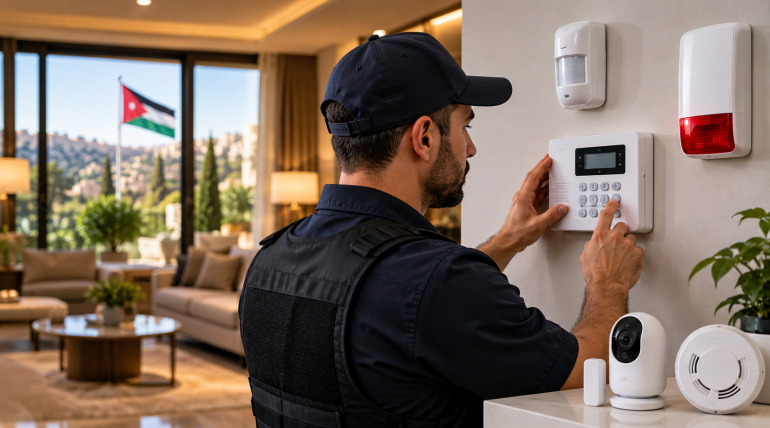
Protect What Matters Most with the Right Alarm System
A reliable house alarm system is an important part of protecting your home, family, property, and valuables. However, choosing the right system involves more than simply installing a siren or a few sensors.
Modern home security can combine intrusion detection, motion sensors, door and window protection, surveillance, fire and smoke detection, monitoring, and clearly defined response procedures.
The best house alarm systems are those designed around the actual requirements of the property. A small apartment, private villa, residential compound, and rural property may each require a different combination of security measures.
This guide explains the main components of modern house alarm systems, the differences between available technologies, what to consider before choosing a system, and why professional assessment and monitoring can significantly strengthen an overall home security strategy.
With more than a decade of experience in Jordan, Quick Intervention for Security & Armed Protection (Q.I.S.P) provides integrated security solutions tailored to the requirements of homes, villas, farms, businesses, institutions, and other properties.
What Is a House Alarm System?
A house alarm system is a combination of electronic security devices designed to detect specific events or potential threats and generate an appropriate alert.
Depending on the system, it may detect:
- Unauthorized entry
- Movement within protected areas
- Opening of doors or windows
- Glass breakage
- Smoke or fire
- Other predefined security events
Modern systems can also incorporate surveillance cameras, remote notifications, monitoring capabilities, and other security technologies.
The effectiveness of an alarm system depends not only on the quality of its equipment but also on how well it is designed, installed, maintained, monitored, and integrated into the property’s overall security plan.
Why Install a House Alarm System?
A professionally planned alarm system provides an additional layer of protection by helping detect potential incidents as early as possible.
Depending on its configuration, a house alarm system can help:
- Detect unauthorized entry
- Monitor vulnerable access points
- Alert occupants to potential incidents
- Provide early warning of smoke or fire
- Support remote property monitoring
- Improve awareness when the property is unoccupied
- Complement cameras and physical security measures
- Support established security response procedures
Alarm systems are particularly valuable when they form part of a layered security strategy rather than operating as an isolated solution.
Core Components of the Best House Alarm Systems
Understanding the main components of a home alarm system can help you determine which features are appropriate for your property.
1. Motion Detectors
Motion detectors are designed to identify movement within a protected area.
Passive Infrared (PIR) sensors are commonly used to detect changes in infrared energy associated with movement.
Depending on the property’s layout, motion detectors may be positioned in areas such as:
- Entrances
- Hallways
- Living areas
- Staircases
- Selected outdoor or perimeter zones
Correct placement is important to improve detection while reducing unnecessary or false alarms.
2. Door and Window Contact Sensors
Door and window sensors help detect when a protected entry point is opened.
These devices are commonly installed on:
- Main entrances
- Secondary doors
- Accessible windows
- Balcony doors
- Other vulnerable access points
They provide a straightforward but important layer of intrusion detection.
3. Glass-Break Detectors
Glass-break detectors are designed to identify acoustic patterns associated with breaking glass.
They can provide additional protection for properties with:
- Large windows
- Glass doors
- Ground-floor glazing
- Other glass access points
They are generally used alongside other sensors rather than as a replacement for door and window protection.
4. Smoke and Fire Detection
Home security should not focus exclusively on unauthorized entry.
Depending on the system and property requirements, smoke and fire detection can be incorporated into a broader safety and security solution.
Appropriate detector selection and placement should take into account the property layout and applicable safety requirements.
5. Control Panel and Keypads
The control panel acts as the central component of many alarm systems.
It receives signals from connected sensors and processes them according to the system’s configuration.
Depending on the technology selected, users may be able to:
- Arm or disarm the system
- View system status
- Manage different security zones
- Review alerts
- Control selected functions remotely
- Receive notifications through compatible applications
The exact functionality depends on the system and configuration.
6. Sirens and Visual Alerts
Audible and visual alarms can help notify occupants or nearby individuals when a configured security event occurs.
A visible alarm system may also contribute to the property’s overall deterrence strategy.
However, a siren alone should not be considered a complete security solution.
7. Professional Monitoring
Professional monitoring adds another operational layer to an alarm system.
Rather than relying solely on an occupant noticing an alarm or smartphone notification, a monitored solution can transmit configured security events for handling according to established procedures.
Depending on the service arrangement, this may involve:
- Receiving alarm signals
- Reviewing alert information
- Verification procedures
- Contacting designated persons
- Coordinating an appropriate security response
- Escalating incidents according to agreed procedures
Homeowners should ask their security provider exactly how monitoring and response procedures work before selecting a service.
Types of House Alarm Systems
There is no single alarm system that is best for every property.
Understanding the main options can help you make a more informed decision.
Monitored vs. Unmonitored Alarm Systems
Monitored Alarm Systems
A monitored system transmits configured alerts to a monitoring operation where events can be handled according to established procedures.
Potential advantages include:
- Continuous monitoring
- Professional handling of alarm events
- Defined escalation procedures
- Reduced reliance on the homeowner being available
- Integration with broader security services where applicable
Unmonitored Alarm Systems
An unmonitored system typically activates a local siren or sends notifications directly to the property owner.
Potential advantages may include:
- Lower ongoing operating costs
- Simpler setup
- Direct user control
However, the effectiveness of an unmonitored system may depend heavily on the owner seeing the notification and being able to respond appropriately.
The right choice depends on the property’s risk profile, occupancy, location, and required level of protection.
Wired vs. Wireless House Alarm Systems
Both wired and wireless systems can provide effective security when properly designed and installed.
Wired Alarm Systems
Wired systems use physical cabling to connect system components.
They may be suitable for:
- New construction
- Properties undergoing renovation
- Larger installations
- Locations where permanent infrastructure is preferred
Potential benefits include stable connectivity and reduced dependence on wireless communication between components.
Wireless Alarm Systems
Wireless systems communicate between compatible devices without requiring the same level of physical cabling.
Potential benefits include:
- Flexible installation
- Easier expansion
- Reduced cabling requirements
- Suitability for existing properties
- Integration with compatible smart technologies
The decision between wired and wireless technology should be based on the property itself rather than assuming one option is always superior.
Smart House Alarm Systems
Smart technology has expanded the capabilities of modern alarm systems.
Depending on the selected equipment and configuration, homeowners may be able to:
- Arm and disarm the system remotely
- Receive security notifications
- View system status
- Access compatible surveillance cameras
- Review selected alarm events
- Manage connected security devices
- Control different security zones
Smart features can improve convenience and situational awareness, but they should complement — not replace — appropriate system design and professional security procedures.
Cybersecurity, account protection, software updates, and secure access should also be considered when using internet-connected security devices.
How to Choose the Best House Alarm System
Step 1: Assess Your Property
Start by understanding the property you need to protect.
Consider:
- Property size
- Number of floors
- Number of doors and windows
- Vehicle and pedestrian entrances
- Outdoor areas
- Perimeter vulnerabilities
- Existing security equipment
- Whether the property is occupied continuously
- Periods when the property is vacant
- Location and surrounding environment
A professional site assessment can help identify vulnerabilities that may otherwise be overlooked.
Step 2: Identify Your Security Priorities
Different homeowners have different requirements.
Ask yourself what you primarily want the system to protect against.
Your priorities may include:
- Unauthorized entry
- Perimeter intrusion
- Access through doors or windows
- Fire and smoke
- Monitoring while traveling
- Protection of outdoor areas
- Integration with surveillance
- Protection of valuable areas within the property
Understanding these priorities helps prevent unnecessary equipment while ensuring important vulnerabilities are addressed.
Step 3: Decide Between Self-Monitoring and Professional Monitoring
Self-monitoring may be suitable for some properties, while others may benefit from professional monitoring.
Consider:
- How often the property is vacant
- Whether you can reliably respond to alerts
- The property’s risk profile
- Its location
- The value and nature of the property
- Whether additional security response is required
For properties requiring a higher level of protection, professional monitoring may provide an important additional security layer.
Step 4: Consider Future Expansion
Security requirements can change.
When possible, select a system that can accommodate additional compatible devices such as:
- Sensors
- Cameras
- Detectors
- Additional zones
- Access-control components
- Other security technologies
Scalability can make future upgrades easier and reduce the need to replace the entire system.
Step 5: Verify the Security Provider
The quality of the provider is just as important as the equipment.
Consider:
- Licensing and regulatory compliance
- Professional experience
- Technical capabilities
- Installation procedures
- Maintenance and support
- Monitoring capabilities
- Response procedures
- Ability to conduct security assessments
- Contract terms and responsibilities
A professional security provider should be able to explain clearly what the system does, what happens when an alarm is triggered, and what responsibilities are included in the service.
Step 6: Understand the Response Procedure
Do not select an alarm solution without understanding what happens after an alert.
Ask:
- Where is the alarm received?
- Is the event verified?
- Who is contacted?
- What happens if the client cannot be reached?
- Is a security response available?
- How are incidents escalated?
- How are incidents documented?
These questions can be more important than simply comparing the number of sensors included in a package.
House Alarm Systems and Integrated Security
For some properties, an alarm system alone may not provide the required level of protection.
A broader residential security strategy may combine:
- Alarm and intrusion detection
- Surveillance cameras
- Armed or unarmed security personnel where appropriate
- Mobile security patrols
- Access control
- Perimeter security
- Professional monitoring
- Risk assessment
- Defined response procedures
Each layer serves a different purpose.
Security Layer
Primary Function
Alarm System
Detect potential security events
Surveillance Cameras
Monitor and document activity
Access Control
Manage entry to the property
Security Personnel
Provide physical presence and response
Extend security coverage
Monitoring
Receive and assess alerts
Risk Assessment
Identify and reduce vulnerabilities
The appropriate combination depends on the property’s risks and operational requirements.
Common Mistakes When Choosing a House Alarm System
Choosing Based Only on Price
The cheapest system is not necessarily the most suitable, while the most expensive system is not automatically the best.
Evaluate the complete solution, including equipment, installation, monitoring, maintenance, support, and response procedures.
Ignoring the Property Perimeter
Security planning should consider more than the interior of the home.
Depending on the property, gates, outdoor areas, boundaries, vehicle entrances, and other external areas may require attention.
Installing Equipment Without a Risk Assessment
Installing devices without understanding the property’s vulnerabilities can leave important areas unprotected while adding unnecessary equipment elsewhere.
Assessment should come before system design.
Focusing Only on Intrusion
A comprehensive approach should consider other relevant risks, including smoke and fire detection where appropriate.
Ignoring Maintenance and Testing
Security systems should be maintained and tested according to manufacturer recommendations and service requirements.
A device that is incorrectly configured, damaged, disconnected, or otherwise unable to operate as intended may create a false sense of security.
Overlooking Cybersecurity
Internet-connected security systems should be protected appropriately.
Homeowners should use strong account security, protect access credentials, apply relevant updates, and follow the manufacturer’s security recommendations.
Why Choose Q.I.S.P for Integrated Security Solutions?
Quick Intervention for Security & Armed Protection (Q.I.S.P) has more than a decade of experience providing professional security and protection services in Jordan.
Our approach focuses on developing security solutions according to each client’s actual requirements rather than relying on a standard package for every property.
Depending on the client’s requirements, Q.I.S.P security solutions can incorporate:
- Alarm and monitoring solutions
- Armed and unarmed security personnel
- Mobile security patrols
- Home and villa protection
- Farm and rural property protection
- Security technology
- Risk assessment
- Security consulting
- Rapid-response capabilities
- Integrated security planning
By combining technology, trained personnel, security procedures, and professional assessment, Q.I.S.P helps clients develop a more comprehensive approach to protecting their properties.
Frequently Asked Questions About House Alarm Systems
What is the best type of house alarm system?
There is no single system that is best for every home.
The most appropriate solution depends on the property’s size, layout, access points, occupancy, location, risk profile, and required level of monitoring.
A professional assessment can help determine the appropriate combination of sensors, monitoring, surveillance, and other security measures.
How much does a house alarm system cost?
The cost varies depending on factors such as:
- Property size
- Number and type of sensors
- Number of security zones
- Wired or wireless technology
- Surveillance integration
- Monitoring requirements
- Installation complexity
- Maintenance requirements
- Additional security services
A site assessment is generally the best way to obtain an accurate quotation based on actual requirements.
Can I install a house alarm system myself?
Some systems are designed for self-installation.
However, professional installation may be more appropriate for larger properties or systems requiring multiple sensors, monitoring, cameras, or integration with other security technologies.
Professional installation can also help ensure appropriate sensor placement, configuration, testing, and system commissioning.
Do house alarm systems help deter intruders?
A visible security system can contribute to a broader deterrence strategy.
However, no alarm system can guarantee that an intrusion will not occur.
Effective security generally relies on multiple layers of protection, appropriate system design, and clear response procedures.
Should I choose a monitored alarm system?
That depends on your security requirements.
Professional monitoring may be particularly valuable when a property is frequently unoccupied, when the owner cannot reliably respond to notifications, or when the property’s risk profile requires additional operational support.
Are cameras and alarms the same thing?
No.
Cameras primarily provide visual monitoring and recording, while alarm systems are designed to detect configured events and generate alerts.
When appropriately integrated, the two technologies can complement each other as part of a broader security solution.
Choose an Alarm System Based on Your Actual Risks
The best house alarm systems are not necessarily those with the largest number of sensors or the most advanced features.
The right system is one designed around the property it is intended to protect.
Start by identifying your vulnerabilities, determine the appropriate technologies, understand how monitoring and response will work, and choose a professional security provider capable of supporting the complete security strategy.
For some properties, an alarm system may provide the required level of protection. For others, the appropriate solution may combine alarms, surveillance, monitoring, patrols, security personnel, and professional risk assessment.
Protect Your Property with Q.I.S.P
Whether you need an alarm and monitoring solution, professional security personnel, mobile patrols, home or villa protection, or a comprehensive security assessment, Quick Intervention for Security & Armed Protection (Q.I.S.P) can help develop a security approach tailored to your requirements.
Contact Q.I.S.P today to request a security consultation and customized protection plan.
Quick Intervention for Security & Armed Protection (Q.I.S.P)Integrated Security SolutionsJordan